Queer Places:
University of Oxford, Oxford, Oxfordshire OX1 3PA
Buddington, Old Buddington Lane (just off Hollist Lane), Easebourne, Midhurst, West Sussex, GU29 0QP
All Hallows Churchyard, Brambling Ln, Woolbeding, Midhurst GU29 9RR, United Kingdom
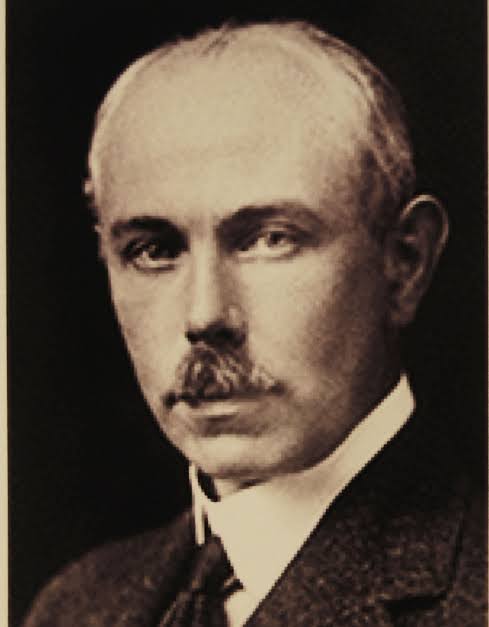 Francis William Bourdillon (March 22, 1852 – January 13, 1921) was an English Victorian poet, scholar, and translator. While he achieved widespread fame in his lifetime
for his short poem "The Night Has a Thousand Eyes," modern literary scholarship also recognizes him as part of the late 19th-century aesthetic network whose work carried
subtle homoerotic and Uranian undertones.
Francis William Bourdillon (March 22, 1852 – January 13, 1921) was an English Victorian poet, scholar, and translator. While he achieved widespread fame in his lifetime
for his short poem "The Night Has a Thousand Eyes," modern literary scholarship also recognizes him as part of the late 19th-century aesthetic network whose work carried
subtle homoerotic and Uranian undertones.
Born in Runcorn, Cheshire, Bourdillon was the son of the Reverend Francis Bourdillon, an Anglican clergyman. He grew up in Sussex after his father became the rector of
Woolbeding near Midhurst.
Bourdillon attended Haileybury College before matriculating to Worcester College, Oxford, where he earned his Bachelor of Arts in 1877 and his Master of Arts in 1882.
His years at Oxford coincided with a period of intense artistic and intellectual movement, where Aestheticism, Neo-Gothic revivalism, and romantic male friendships
flourished in academic circles.
Between 1876 and 1879, Bourdillon served as private tutor at Cumberland Lodge to Prince Christian Victor and Prince Albert of Schleswig-Holstein—grandsons of Queen
Victoria through her daughter Princess Helena.
He later worked as a tutor in Eastbourne. Alongside writing poetry, he became an accomplished scholar of Old French literature, producing a notable translation of
Aucassin et Nicolette (1887) and an extensive bibliographical study, The Early Editions of the Roman de la Rose (1906).
He married Agnes Smith in 1882, and the couple had three children. (His grandson, Tom Bourdillon, would later become a pioneer mountaineer on the 1953 British Mount
Everest Expedition). Later in life, after working as a tutor at Cumberland Lodge and in
Eastbourne, Bourdillon built his own home—named Buddington (or Buddington House)—near Midhurst and the village of Easebourne. Bourdillon lived at Buddington House with his
family, including his wife Agnes Smyth. Census records show that by 1911, Bourdillon and his wife were living separately. He spent his later years writing poetry, studying
Old French literature, and assembling a vast personal library of thousands of rare books and medieval manuscripts at the residence. Bourdillon passed away at his home,
Buddington House, on January 13, 1921, at the age of 68.
Following Bourdillon's death at Buddington House, the majority of his extensive personal library—comprising over 6,000 printed volumes and 40 medieval manuscripts
(including rare illuminated editions of the Roman de la Rose)—was acquired in 1922 by the National Library of Wales.
Over his career, Bourdillon published 13 volumes of poetry containing nearly 500 poems. His single most famous lyric, "The Night Has a Thousand Eyes," appeared in his
debut 1878 collection Among the Flowers, and Other Poems: The night has a thousand eyes, / And the day but one; / Yet the light of the bright world dies / With the dying
sun. / The mind has a thousand eyes, / And the heart but one; / Yet the light of a whole life dies / When love is done.
In 1970, art historian and scholar Brian Reade compiled Sexual Heretics: Male Homosexuality in English Literature from 1850–1900. The anthology mapped the covert,
coded, and sometimes overt homoerotic expressions among late Victorian poets, academics, and aesthetic writers.
Reade selected two specific works by Bourdillon to illustrate how late Victorian poets used classical motifs, French poetic tradition, and nature symbolism to
articulate taboo or unspoken affection:
"The Legend of the Water Lilies" (1878), first published in Among the Flowers, and Other Poems, is a narrative poem that uses mythic and pastoral imagery to describe
delicate, idealized beauty and longing. In Reade's context, the poem's depiction of tragic, unattainable love and water-lily symbolism fits within the broader Victorian
aesthetic trend of sublimating male-male desire into romanticized nature allegories.
"Si vous croyez que je vais dire" (1892), taking its title from Alfred de Musset's famous line ("If you think I'm going to
tell you whom I love..."), this poem centers on secret, unutterable devotion. In Victorian literature, the refrain of forbidden or unnamed affection was a central device
for writers expressing homoerotic romanticism under the social and legal constraints of the era—a theme Reade identified as quintessential to the "heretical" subculture of
late 19th-century English verse.
References:
Other references:
- Reade, Brian (Ed.). Sexual Heretics: Male Homosexuality in English Literature from 1850–1900. Routledge & Kegan Paul, 1970.
- Bourdillon, Francis William. Among the Flowers, and Other Poems. Marcus Ward & Co., 1878.
- Bourdillon, Francis William. A Lost God, and Other Poems. Elkin Mathews & John Lane, 1892.
- Bourdillon, Francis William (Trans.). Aucassin & Nicolette: A Love Story. Kegan Paul, Trench & Co., 1887.
- Foster, Joseph. Alumni Oxonienses: The Members of the University of Oxford, 1715–1886. Parker and Co., 1888–1892.
- The Oxford Dictionary of National Biography (ODNB). Oxford University Press. Biographical entries covering the Reverend Francis Bourdillon, Francis William Bourdillon, and his grandson, mountaineer Tom Bourdillon.
- D'Arch Smith, Timothy. Love in Earnest: Some Notes on the Lives and Writings of English 'Uranian' Poets from 1889 to 1930. Routledge & Kegan Paul, 1970.
Support this project
This website is a passion project researched, developed, and funded entirely by me. If you find the content valuable and would like to help support the ongoing research and hosting costs, any contribution is deeply appreciated.
Thank you for keeping this independent resource alive!
My books on Amazon: Elisa Rolle's books
BACK TO HOME PAGE
